





The visit
Before childcare entry, a first meeting is scheduled with a member of the Management Team, who presents the institution, regulation and educational approach to the parents.
Pedagogy
Educational Project
The educational project reflects the institution's values. It sets the educational approach and methods used as well as a general framework and points of reference to which every professional can refer. This document explains the duties of the people who work within the Myosotis Foundation child care centers, as well as their roles and purpose. The Team's main objective is to take responsibility for each child’s needs and rhythm, while awakening kids to interactions with others and community life.
The visit
Before childcare entry, a first meeting is scheduled with a member of the Management Team, who presents the institution, regulation and educational approach to the parents.
The educational
meeting
Before the start of the contract, or on the child’s first day, a meeting is organised with the child’s key educator and the sector manager. This meeting makes it possible to gain a better understanding of the child and their family, including their habits, needs and the family’s expectations. It is also an opportunity to answer any questions and to present how the childcare operates.

The familiarisation program
Familiarisation is an essential and gradual stage when a child starts the childcare. Its educational aim is to enable the child to discover their new environment calmly, to learn to feel safe within it and to build a trusting relationship with the educational team.
From an emotional perspective, this process seeks to reassure both the child and the parents, to ease the adaptation process, to reduce separation-related anxiety and to promote a smooth and gentle transition into group life.
The familiarisation period lasts two weeks for Nurseries and Toddlers, and one week for the Preschoolers.
A key moment for the child and their Family
During the first week, the child is welcomed each day together with one of their parents, without separation, for approximately three hours. This parental presence allows the child to explore their new environment with confidence.
It also gives parents the opportunity to observe, ask questions to the team, share information about their child’s habits, health or preferences, and pass on routines that help reassure the child (lullabies, familiar objects, everyday gestures). These exchanges help build a strong partnership between families and professionals, who rely on this information to support each child in the best possible way.
From the second week onwards, the child gradually begins to stay without their parents, with the length of time increasing each day according to the child’s rhythm and reactions. From the third week, the child attends the nursery according to the hours set out in their contract.
It is important to note that familiarisation begins on the first day of the contract and that its organisation remains flexible in order to adapt to the needs of each child and family.
Attendance hours are adjusted according to the child’s rhythm, the possibilities of the group welcoming them and the availability of families, thus encouraging a progressive and respectful adaptation for everyone.
The role of the Reference Educator
On a daily basis, the entire educational team ensures the well-being and development of all children within a safe and coherent group setting. In order to strengthen this support, each child is assigned a key educator, identified as a main point of reference for both the child and their family.
The key educator pays particular attention to the child’s needs, rhythm and development, and helps ensure emotional and educational continuity between home and nursery. In this role, they play a central part in observing the child and sharing relevant information within the team.
For parents, the key educator is a privileged contact person. They are available to discuss the child’s daily life, answer questions, listen to concerns and support families through the different stages of their child’s development.
Sector changes
As the child grows, they move to a different sector in order to develop in an environment suited to their stage of development. These transitions are carefully planned twice a year, depending on group availability.
Before each transition, sector managers inform parents of the planned date and organise a meeting with the new educational team. This moment allows parents to visit the new space, understand how the next group operates and ask questions. The aim is to ensure that each transition is reassuring and smooth for both the child and their parents.
Tailored meals
For the children, meals go with multiple discoveries: flavors, smells, colors, conviviality. Each family’s culture is taken into account as much as possible. Requests are assessed depending on their nature (for example: no-pork diet).
Depending on the child’s age, meals are taken under different conditions. The little ones are fed on request in a calm and reassuring place. Their individual rhythm is taken into account. Children that are not autonomous while seated are fed in the educator’s arms, which enable them to share a privileged moment with the adult. The older children from the Nurseries, as well as the Toddlers and Preschoolers have their meals in group, accompanied by the educational staff on every occasion.
In the Preschoolers section, a self-service option is available to meet children’s need for physical activity and to help them develop their independence. By serving themselves using suitable ustensils, children practise their fine motor skills and improve their coordination. They learn to control the portions they serve themselves and gradually develop a sense of fullness.
Rooms for mothers wishing to breastfeed on site are also provided.Meals
preparation
Meals are prepared on site by our chef and his Eldora team. The “Fourchette verte” label (Green fork) for young children aims to favor healthy and balanced food, and guarantees the intake of essential nutrients throughout the day. New food is introduced at home until the age of one. The parents communicate necessary information to the team, so that we are able to adapt the meal’s configuration (food, mixed, unmixed, allergy - if medical certificate).
The childcare has been certified "Fourchette verte"
Free play
It is important to leave enough space to free and spontaneous play. The child has also the right to do nothing, to dream. The educational team is attentive to individual needs.
Free play gives children the opportunity to develop their sensoriality and to take initiatives. Children explore their senses, develop their language, creativity and motor skills. They experiment relationships with their peers. Through this kind of play, they can also express their emotions and show what worries them or what they are feeling in all ranges of negative and positive emotions.
Guided activities are frequently offered by the educational team. Through various workshops (painting, craft making, drawing, etc.) and at their own rhythm, children exercise their ability to express themselves according to their desires and needs.
On the other side, manual, sensory and creative activities are intended to develop their five senses: sight, hearing, smell, touch and taste.
The child care center has educational and pedagogical material adapted to children’s age and needs (puzzles, shapes games, board games, motor skills equipment, etc.). The educational team balances free play with directed activities, so that children can have as varied experiences as possible.
Preschoolers sector’s
‘Future Schoolchildren’ Project
In the Preschoolers sector, a project entitled ‘Future Schoolchildren’ is offered to pre-school children over a set period between April and June.
This project provides specific opportunities to meet the needs and interests of children who show a keen curiosity and a desire to understand and explore.
The activities on offer focus on experimentation, hands-on learning and discovery in an environment designed to support their independence and learning. Interactions between peers play a key role in the co-construction of knowledge.
The childcare has been certified "Eco-Schools" and "Youp'là bouge"

Psychomotor activities
These activities (psychomotor trails, gym, yoga, rounds, etc.) stimulate motor development. They promote awareness of body image, make the children aware of their own body and help them to better understand how to locate themselves in space.
We offer stimulating premises that promote movement. The educational team supports the children in their learning process, which gives them the opportunity to take risks according to their abilities and to surpass themselves. Children evolve at their own rhythm in a progressive and continuous way.
Children sharpen their motor skills on a daily basis: during free play, guided activities, meals and throughout the day.
Animation moments or “welcome time”
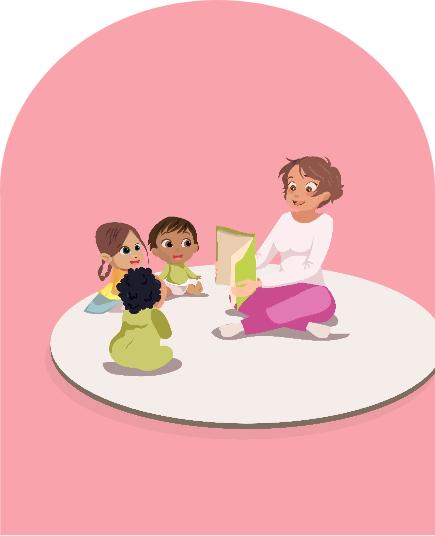
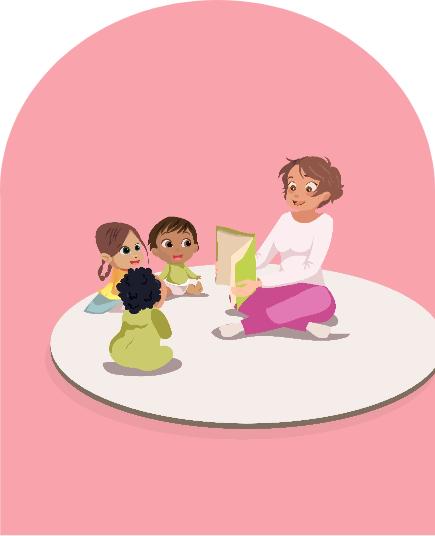
Welcome times are moments during which children gather and are invited to express themselves and listen to each other. Singing, dancing, rhymes and other stories are an integral part of the animation, sometimes linked to a specific topic.
Outings
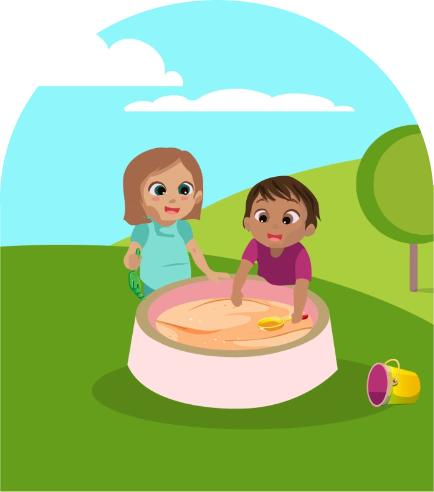
Outdoor activities are proper times to observe the environment, exercise and develop physical skills. It is an opportunity to let off steam: run, shout, jump, ride a bike, climb, etc. They also allow us to raise awareness among children of ecology. In case of special outings, parents are sometimes invited to share a recreational and friendly moment.
Discovering books
Books can be discovered with the adult, between children but also independently. Children participate in the way they want (at a distance, by playing, by always looking at the same book), so that they can positively apprehend this object and familiarize themselves with it. We are faithful to the text, indeed we pay attention to learning new words and raise awareness of different storytelling types, among other things.
Books have many benefits for children. Telling stories encourages the development of language, five senses, curiosity, imagination, as well as creativity. It is a fun way to approach various themes through traditional tales, stories, picture and sensory books.

Groups

Nurseries
Children from 3 to 24 months
4 groups of 10 children
Accommodation adapted to your child’s needs and rhythm
Tight collaboration with families
A diet that evolves based on your child’s development
Activities that allow discovery

Toddlers
Children from 18 to 36 months
3 groups of 14 children
Activities and outings that promote motor skills, cognitive and sensory development
Games and group dynamics that encourage socialization and language learning
A support in the recognition of emotions

Preschoolers
Children from 3 to 4 years old
2 groups of 20 children
Activities focused on collaboration, sharing and exchange with peers
Stimulating outings
Learning cleanliness and hygiene practices
Support for autonomy